You may be surprised to discover the size, shape and location of your uterus. But you’ll understand right away why you experience so much pain, discomfort and bleeding when dealing with AUB.
First let’s look at the basics:
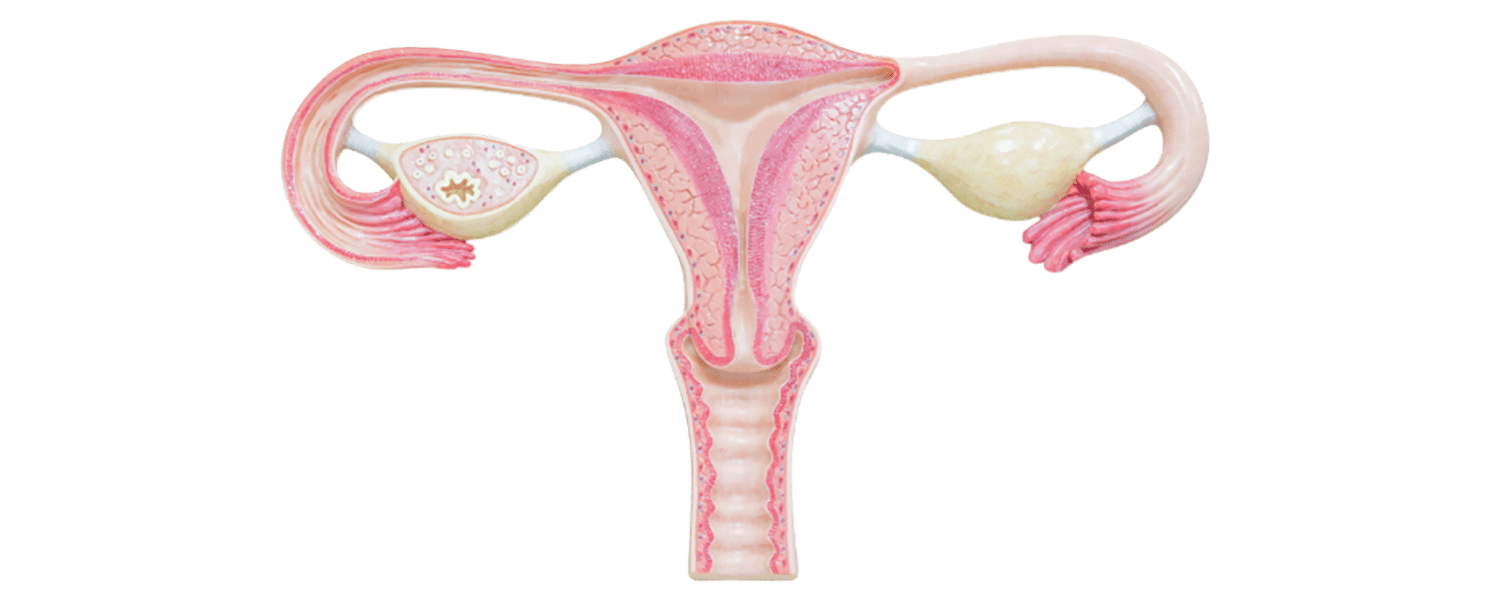
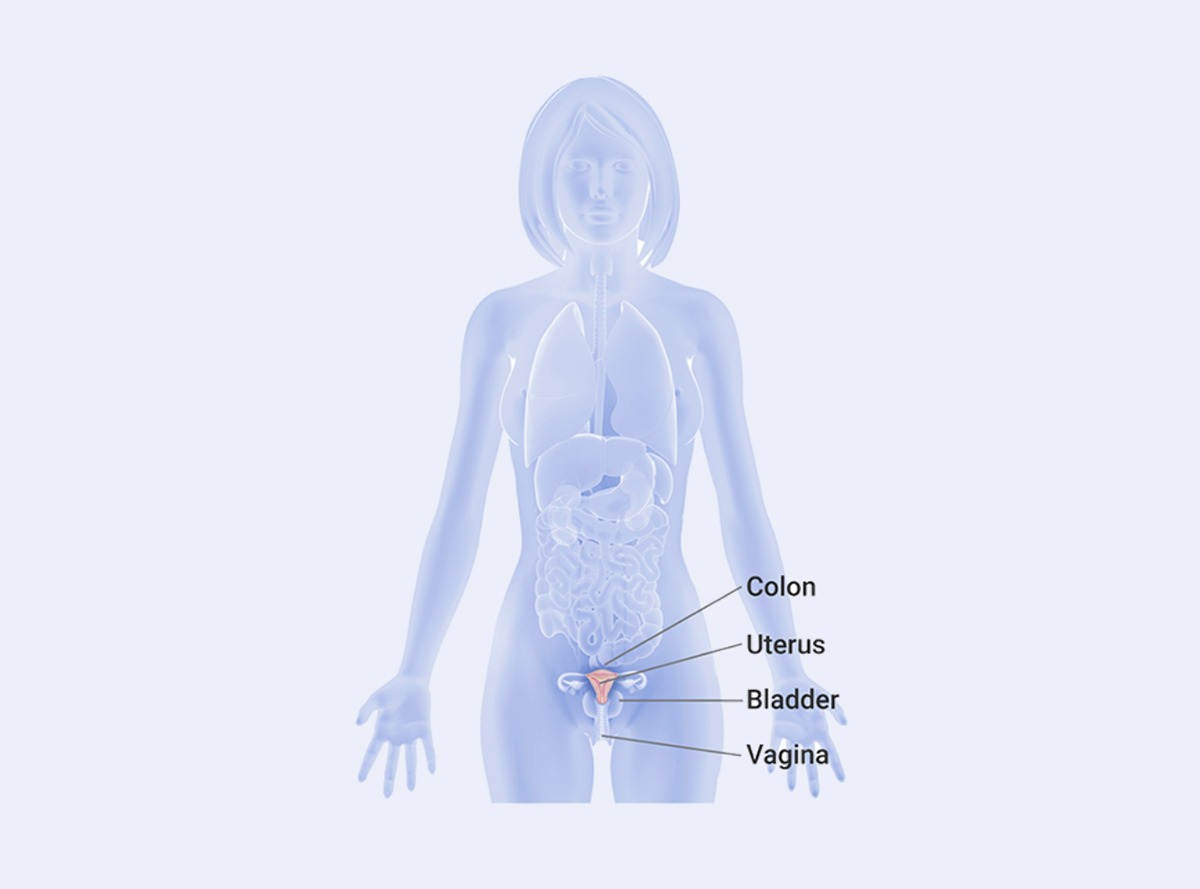
This common view of the uterus may lead you to believe that it floats in open space with nothing around it and is shaped like a vessel or bowl. It doesn’t and it’s not. It’s in a compact space sandwiched between the bladder and rectum and flat as a folded pancake.
Not big at all. The entire average non-pregnant uterus is just under three inches tall, two inches wide, and one inch thick. In most cases, the uterus leans over the bladder, like an umbrella, and the rectum sits right behind the uterus.
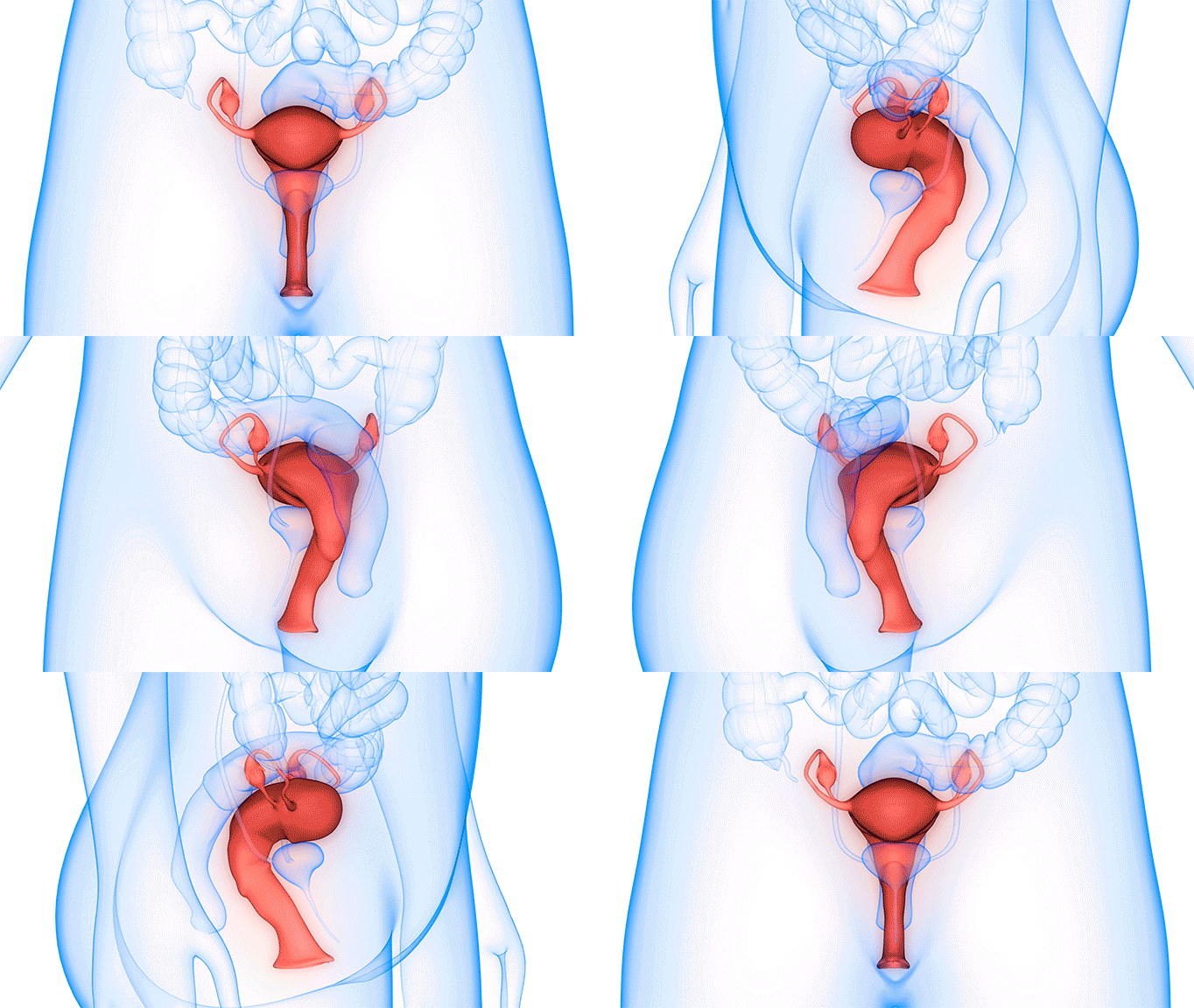
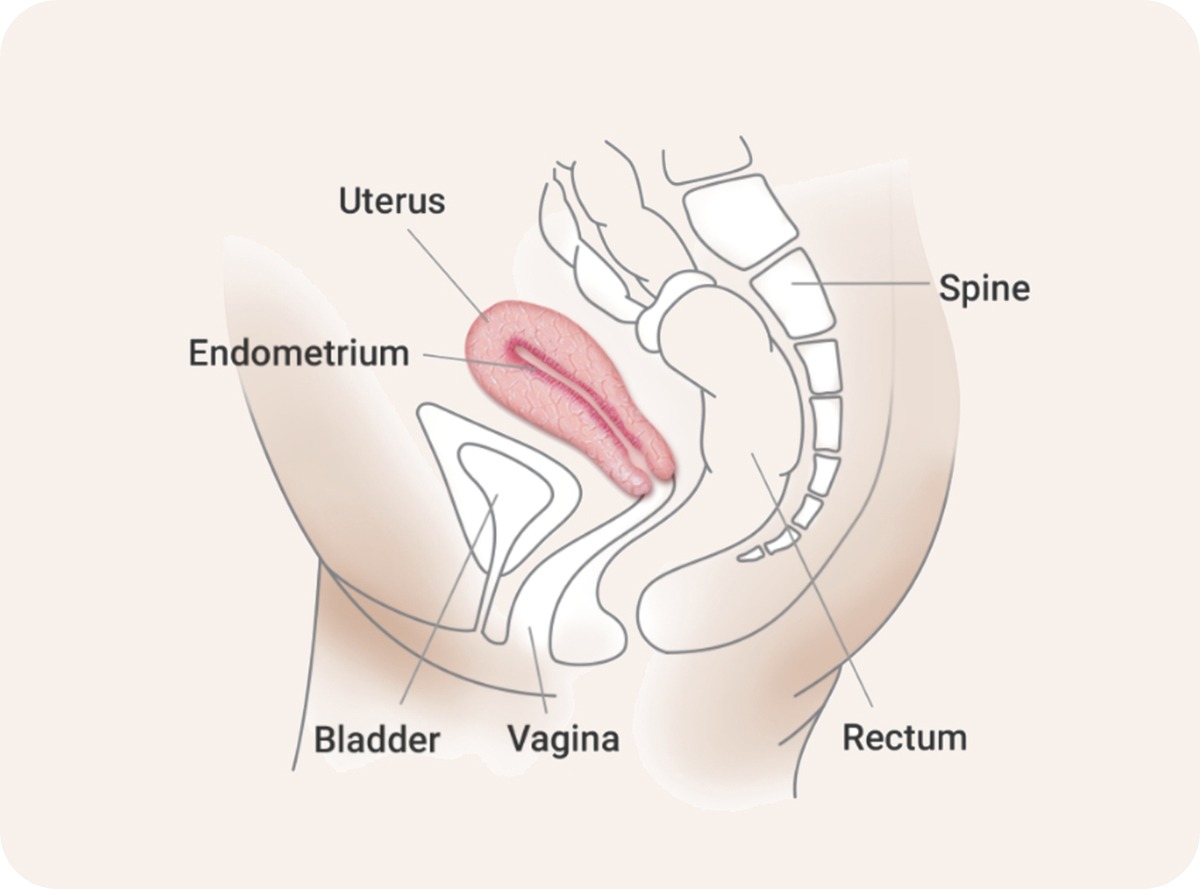
From the front, the uterus does look like an upside-down pear. But that can be a misleading view, making it appear that the uterine cavity is a roomy bowl. The side view shows the narrow space that exists between the two interior walls of the uterus. That narrow space is a flat, triangular-shaped cavity.
So from the side view, you can see how any growths in the cavity or in the muscle walls of the uterus would cause problems. Not just for the uterus. But for the surrounding organs, spine and nerves as well.
(Hello, back and leg pain.)
Remember, the non-pregnant uterus isn’t like a balloon, it’s a muscle. Only when pregnant–when hormones are helping–do the uterus muscle fibers soften. Then the uterus is able to grow up to 20 times its size, create a whole new organ (the placenta) and nurture one or more human beings until birth.
There is still so much to learn about this remarkable organ. But in the last few years, there has been progress on the research front. For instance, a 2018 Mayo Clinic study on the long-term effects of hysterectomies shows:
*A partial hysterectomy is the removal of the uterus, leaving the cervix and ovaries in place.
There are cases where the only option for a woman is to undergo a hysterectomy. But the data shows that 68% of all hysterectomies are performed for benign (unnecessary) reasons, the most common being AUB.2
We’re at a pivotal time in understanding the uterus. And it’s clear that uterus-sparing technologies are essential. There is simply too much that is unknown about removing the uterus, a crucial organ in a woman’s body. There are options that do not require major surgery or the loss of your uterus. Take the time to explore them and make the best choice for you.
Where technology and gynecology meet in the fight against AUB, you’ll find Axora Medical.
Find outA consultation with a gynecologist who understands AUB is what you need and deserve.
Find a providerA consultation with a gynecologist who understands AUB is what you need and deserve.
Find a provider1. Hysterectomy Associated with an Increased Risk of Cardiovascular Disease Study Says. https://www.mayoclinic.org, Accessed July 28, 2021.
2. Plotting the Downward Trend in Traditional Hysterectomy. Available at: https://labblog.uofmhealth.org, Accessed July 28, 2021.


