
When you know the source–the root cause of your heavy periods–you can confidently choose a treatment pathway that supports you.
Things can be scary when you’re in the dark
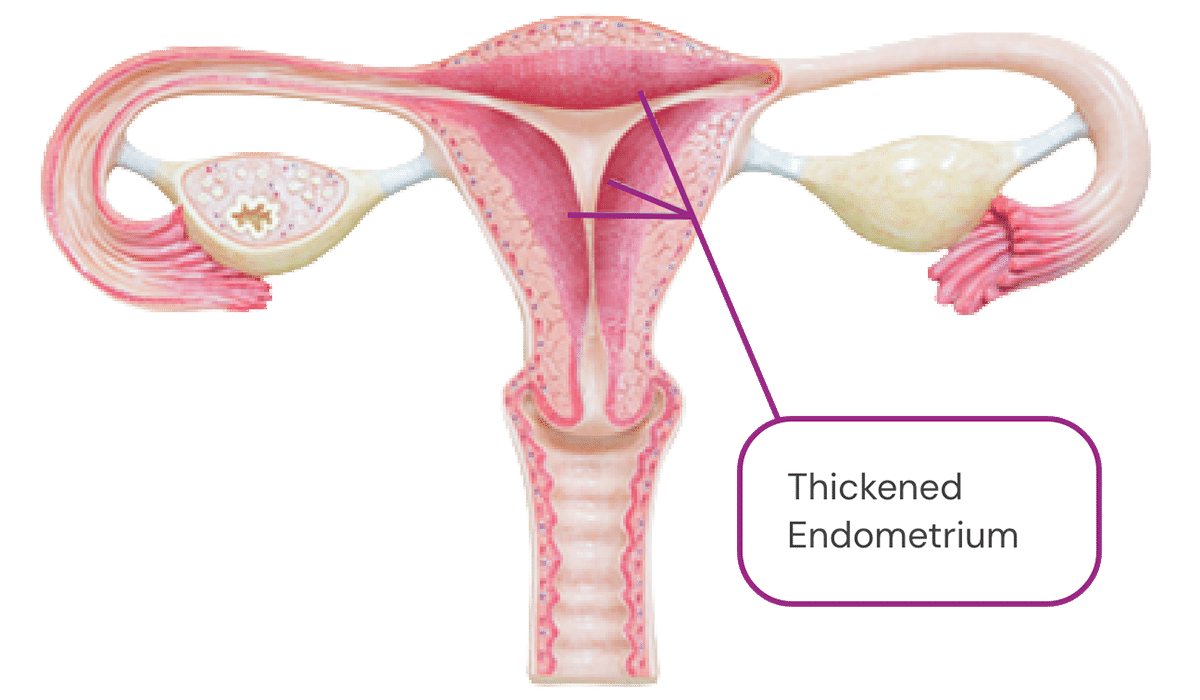
If you have heavy menstrual bleeding with regular menstrual cycles and no other causes can be identified, you may be diagnosed with Endometrial dysfunction, or AUB-E.
This diagnosis suggests there are irregularities in hormone levels during the shedding and repairing of the Endometrium, which can lead to endometrial tissue that is thicker than normal, resulting in a heavy and long period, often with large blood clots.
AUB-E is an exclusion diagnosis. Meaning, fibroids and polyps (and other common causes) have been ruled out as the cause of AUB.
Heavy menstrual bleeding
Periods with clots
Long periods (7+ days)
Bleeding between periods
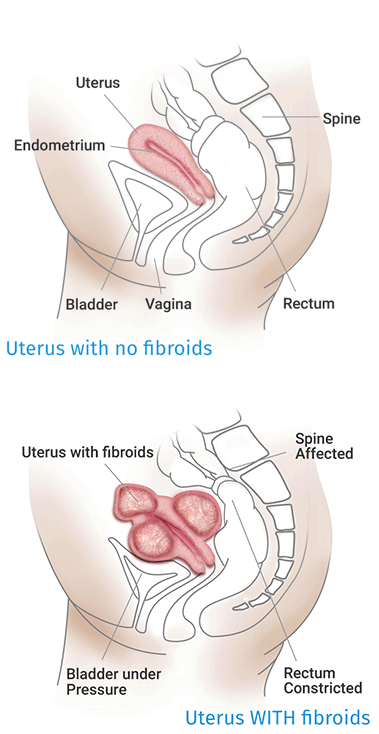
Fibroids are dense growths and can be within the walls of the uterus, outside the uterine cavity, or protrude into the uterine cavity. They are muscle and fibrous connective tissue and are generally smooth and rounded in appearance.
By age 50, more than 80% of Black women and nearly 70% of White women will experience fibroids.1
You may have a single fibroid that is tiny and have no symptoms. Or you may have a big fibroid that is larger than your actual uterus and have pain in your back and legs. You can even have clusters of them.
And they’re not soft. They can be hard like a baseball or golf ball. Consider the size of your uterus (approximately 3” x 2” x 1”) and its location (nested next to your colon and intestines and on top of your bladder) and now you can imagine how fibroids cause so many problems.
Those intense cramps and aches are not your imagination.
Heavy menstrual bleeding
Menstrual periods lasting more than a week
Pelvic pressure or pain
Frequent urination
Difficulty emptying the bladder
Constipation
Backache or leg pains
Infertility
Frequent, unpredictable periods
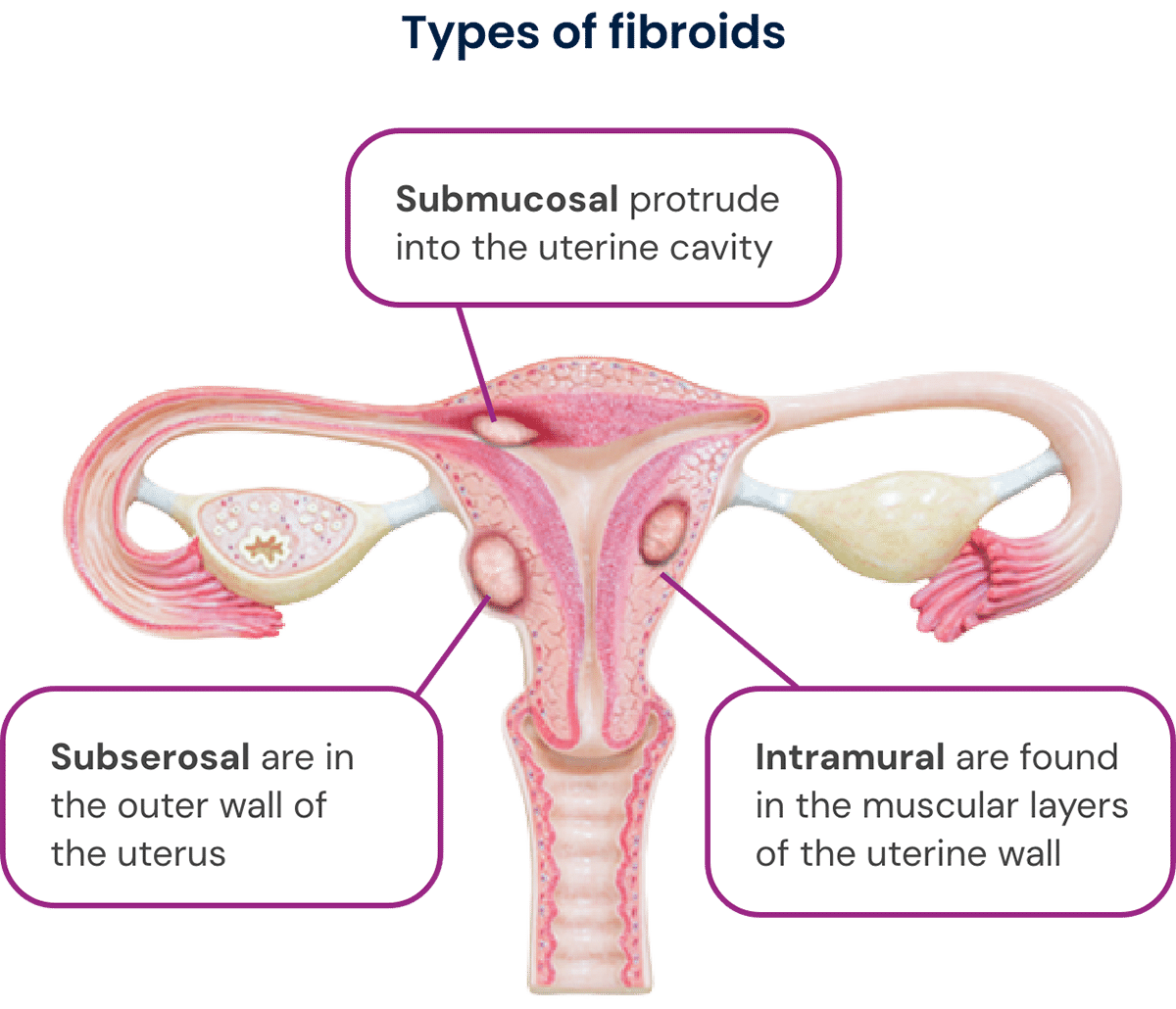
Fibroids are dense growths and can be within the walls of the uterus, outside the uterine cavity, or protrude into the uterine cavity. They are muscle and fibrous connective tissue and are generally smooth and rounded in appearance.
saw 2 or more healthcare providers for diagnosis
reported missing work due to symptoms
believed symptoms hindered their career
Treatments that do not involve invasive surgery
Treatments that preserve the uterus
Treatments that preserve fertility
(under 40 years of age)
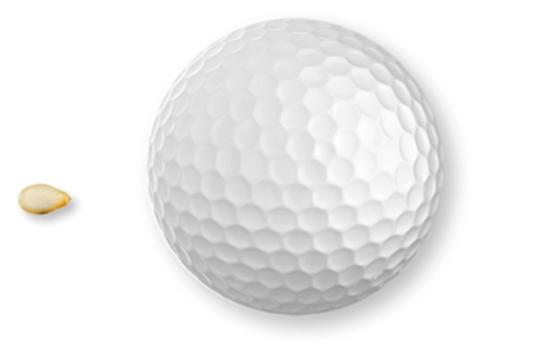
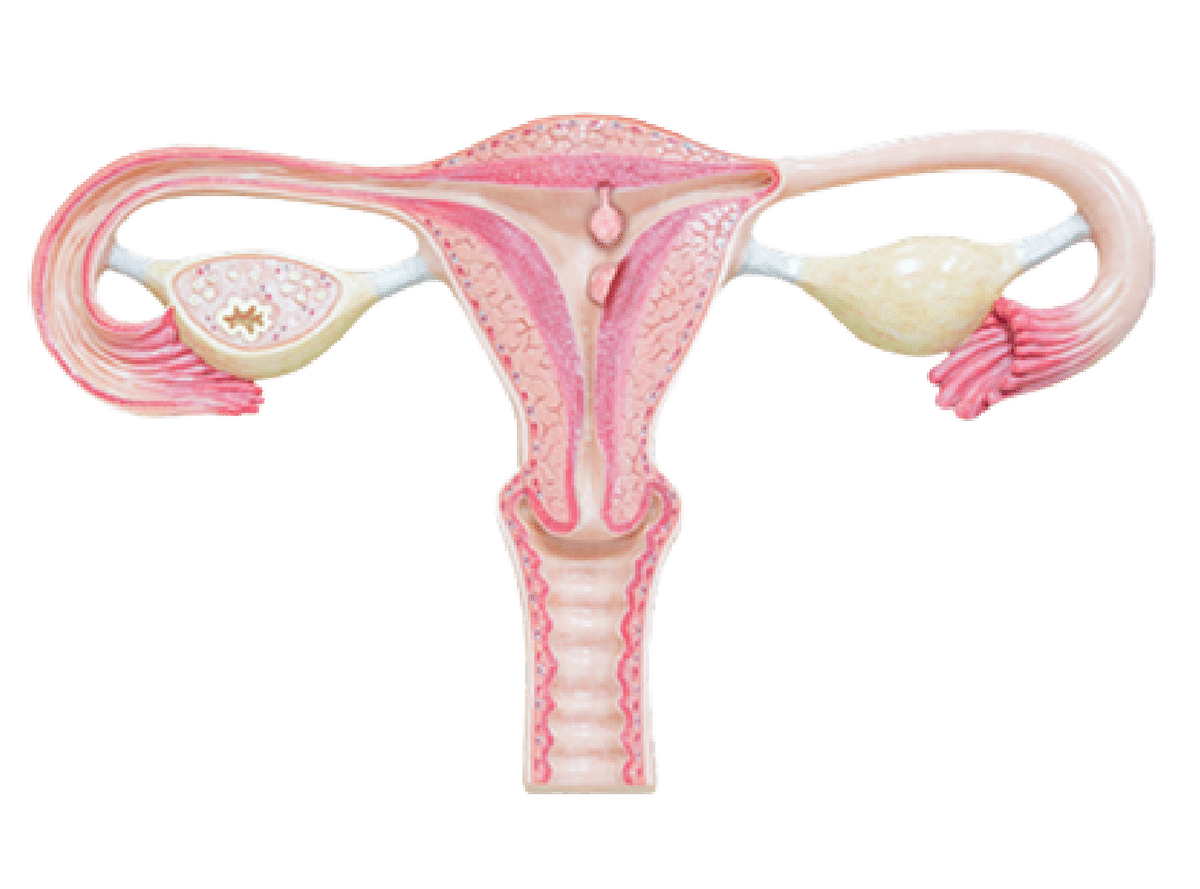
Uterine polyps are composed of endometrial cells and grow in response to circulating estrogen. They form on the lining of the uterine cavity and are attached to the uterine wall by a large base or a thin stalk. While they usually remain inside your uterus, they can sometimes be found in your cervical canal, vagina or blocking your fallopian tubes.
They range in size from a few millimeters—no larger than a sesame seed—to several centimeters—golf-ball-size or larger.3
(Remember your uterus is approximately 3” x 2” x 1”)
Irregular menstrual bleeding — for example, having frequent, unpredictable periods of variable length and heaviness
Bleeding between menstrual periods
Excessively heavy menstrual bleeding
Vaginal bleeding after menopause
Infertility
A consultation with a gynecologist who understands AUB is what you need and deserve.
Find a providerA consultation with a gynecologist who understands AUB is what you need and deserve.
Find a provider1. Eltoukhi HM, Modi MN, Weston M, Armstrong AY, Stewart EA. The health disparities of uterine fibroid tumors for African American women: a public health issue. Am J Obstet Gynecol. 2014;210(3):194-199. doi:10.1016/j.ajog.2013.08.008.
2. Borah BJ, Nicholson WK, Bradley L, Stewart EA. The impact of uterine leiomyomas: a national survey of affected women. Am J Obstet Gynecol. 2013;209(4):319.e1-319.e20. doi:10.1016/j.ajog.2013.07.017.
3. Mayo Clinic Uterine Polyps Webpage. Updated 1998. Accessed June 2022. https://www.mayoclinic.org/diseases-conditions/uterine-polyps/symptoms-causes/syc-20378709
